
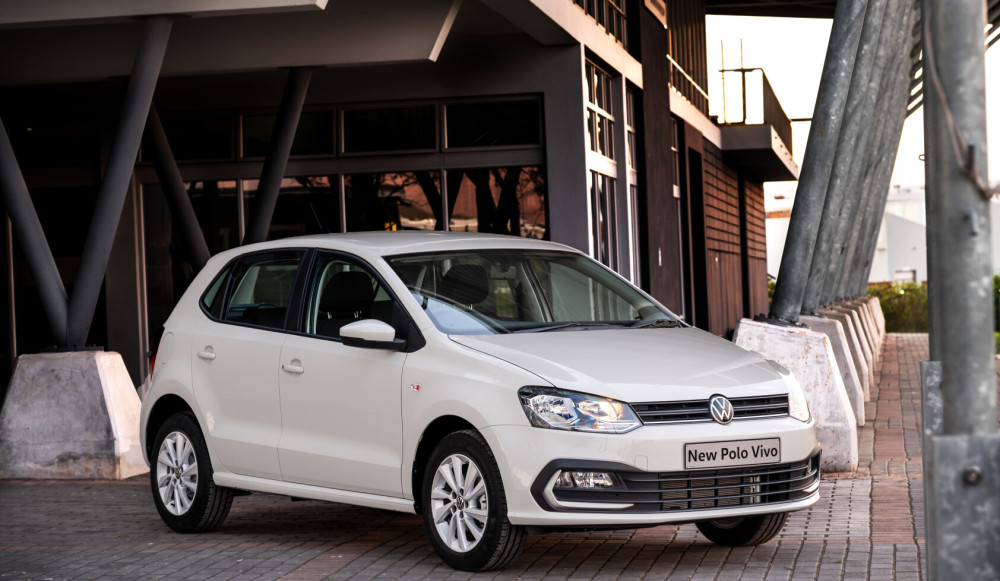
- R150 000 is an imported used car price point, for budget buyers in South Africa.
- Whether it is a compact family car or a buy for one of your kids finishing school, there’s a lot of pressure to buy ‘right’, for R150 000.
- Long distances and lots of dangerous road conditions mean you need to think carefully about that R150 000 car. We’re here to help you.
You need a dependable, safe, and easy-to-maintain family car, or a first car for your kids, who are about to leave school. But your budget is limited to R150 000. So, what should you look for?
South Africa has a deep market of used budget cars. That means you have a lot of choice for a low- to mid-mileage car, for R150 000. But you need to shop smart to avoid some of the problematic features and technical issues that pose a real risk when buying a budget car in South Africa.
Suzuki Swifts and Vivos from the early to mid-2010s, are very popular and price near that R150 000 budget. But shouldn’t you rather get a much newer, lower-mileage budget car from Renault or Hyundai, that's only about five years old? Or even one of those ultra-affordable Suzuki S-Pressos?
We’re here to give you the deep knowledge you need to answer all the questions buyers on a budget have.
Ignore the screens

In the early 2010s, the idea of a large, high-resolution touchscreen infotainment system in a budget car, was unthinkable. But today, it’s pretty standard. And that can create a false sense of economy when you are shopping for a used bargain car, around R150 000.
When it comes to marketing their budget cars, some manufacturers have prioritised a touchscreen infotainment system, over safety features. Why? Because they know that when you are buying on a budget, or when your teenage kids are involved in choosing their first car, a screen is all they care about.
But a multicoloured information screen with cute graphics isn’t going to help you in that moment when you need to make an emergency steering and braking action to avoid a collision. Think about that.
Buy your quality R150 000 Suzuki Swift on ChangeCars
ESP is a must
By law, new South African budget cars don’t have to have standard electronic stability control (ESP). But in a country where driving speeds are high, with lots of heavy trucking traffic and the risk of animals venturing into the road, ESP is vital.
Why does ESP matter so much? Most new car buyers know what anti-lock brakes (ABS) do. It pulses the brake system when you apply the emergency brake, to prevent wheel lock-up. Why? Because once your wheels are locked, you can’t steer around a collision anymore.
But ESP builds on the hardware of an ABS system, also using the brakes, but to control braking force on all the wheels. What does it do? Sensors calculate if you are about to get into a skid by evaluating steering angle, roll momentum and the road surface shape. And it prevents you from skidding into a ditch, hitting the kerb, and potentially becoming involved in a dangerous rollover accident.
There are many budget cars in that R150 000 price range that are used and don’t have ESP. But it’s really worth your driving safety, or that of your kids if you are buying a student car, to have a vehicle with ESP onboard.
Buy a quality R150 000 Etios on ChangeCars
Manual gearboxes matter

Dipping a clutch pedal and shifting gears can become annoying and tiresome in grinding Cape Town or Gauteng morning or late-afternoon traffic. But everywhere else, a manual gearbox makes the most sense when buying a R150 000 car.
A long time ago, when the South African bargain-car market was served by locally built vehicles like Corsa, Tazz, Fiesta and Soho, you didn’t have to think about gearboxes. They were all manual gearbox cars. But that’s not the case anymore.
Over the last decade, Renault and Suzuki have introduced many entry-level cars featuring automated manual transmissions (AMTs). What’s the difference, and why does it matter?
The AMT gives you the ease of driving in traffic of an automatic, without the cost. In theory… But an AMT gearbox is never going to be as low maintenance as the fluid-drive coupling of a true torque converter automatic. Which can handle crawling up a slow incline in morning traffic without the silent risk of all that clutch wear that inevitably happens with an AMT transmission.
AMTs offer some of the benefits of an automatic (your left leg doesn’t need to do anything in traffic). But they are a lot more complicated and expensive to maintain than a conventional manual gearbox. And when you are buying a used car for R150 000, the last thing you want to worry about is a big pending repair invoice for fixing a faulty or worn AMT transmission.
Buy a quality R150 000 Polo Vivo on ChangeCars
Alloy wheels don’t matter

There was a time when all entry-level cars and double cab bakkies in South Africa, had steel wheels. But most vehicles are now built with alloy wheels. Does that mean you should ignore a bargain budget car in your R150 000, that is, a rolling steelies?
Beyond looking good, alloy wheels are lighter than steel, which means you get lower fuel consumption. They can also be engineered with a spoke shape and construction that can enhance ride quality. Although most of the ride quality comes from large-volume tyres that are inflated to the correct pressure.
The truth is that when you are buying a budget car, and comparing options, alloy wheels don’t matter, at all. In fact, on a budget car, steel wheels are better. Especially in South Africa, where the risk of pothole strikes is very high.
Steel wheels can absorb a pothole strike without completely cracking and failing; they might dent, but you’ll definitely still be able to drive home. It’s why truck wheels are steel, because of their strength and ductility.